

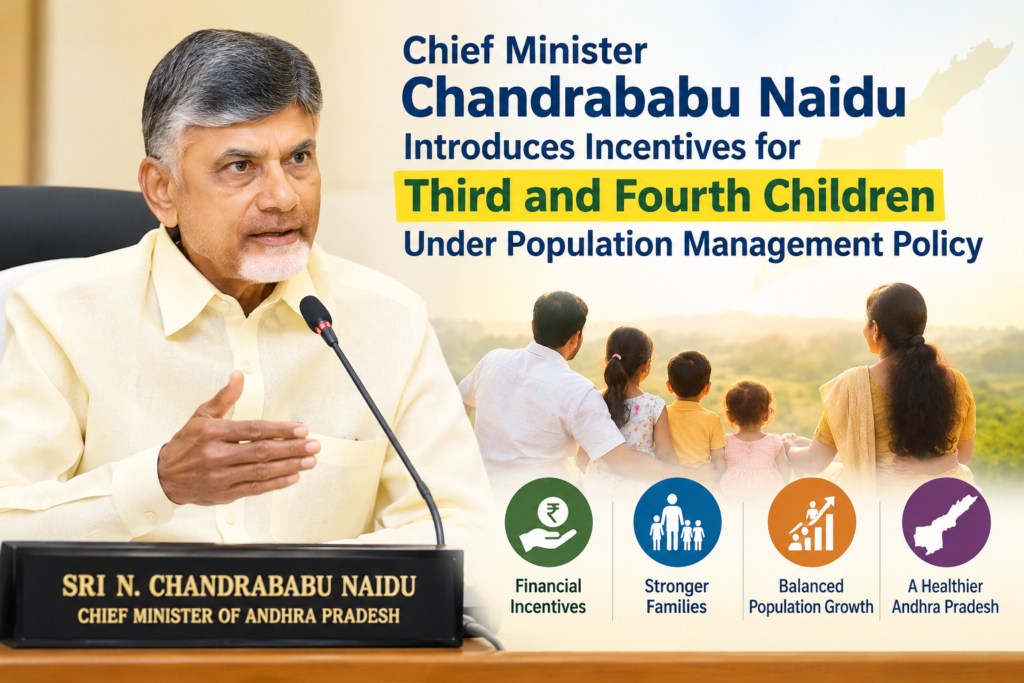
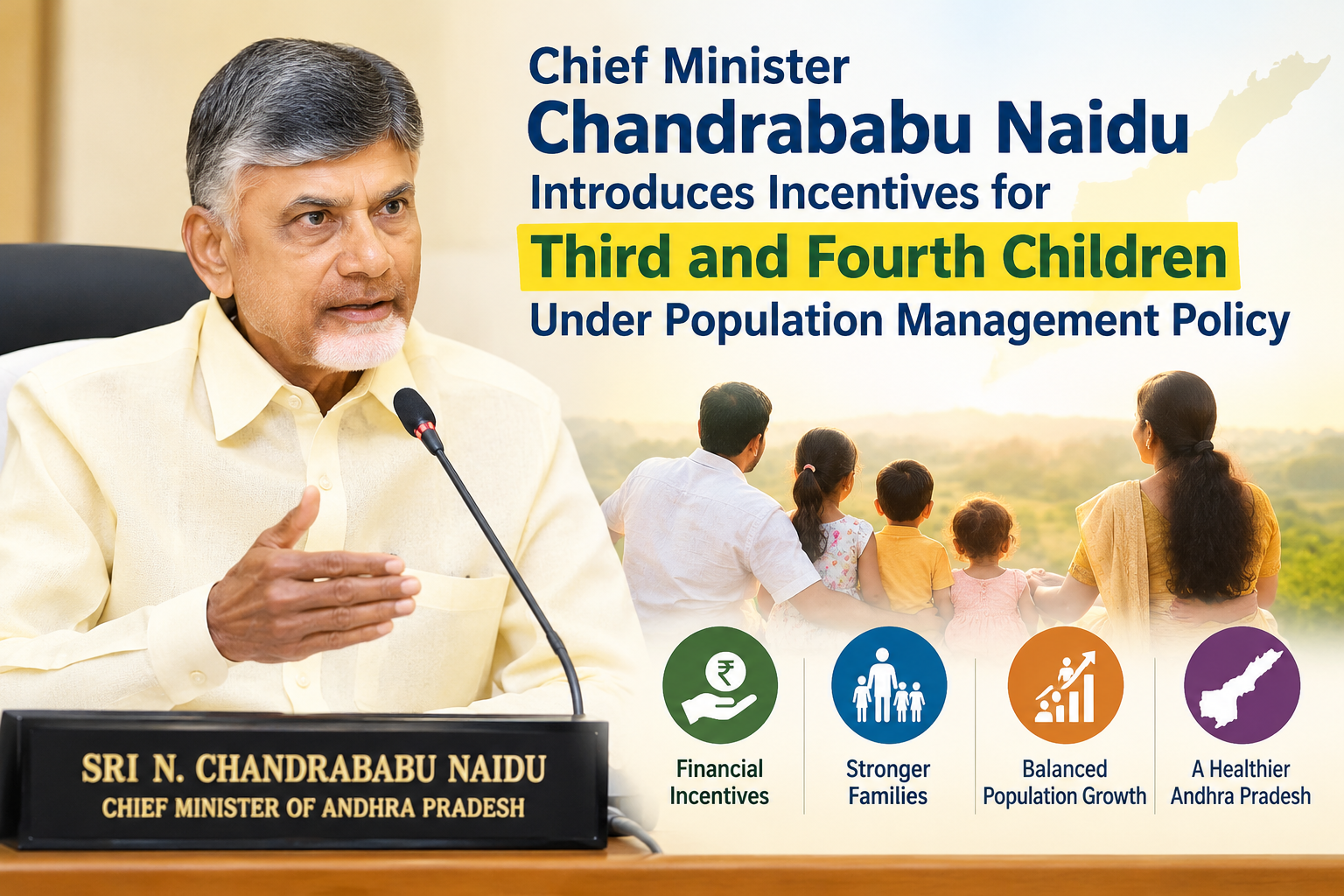
The Government of Andhra Pradesh, led by Chief Minister N. Chandrababu Naidu, has announced a new population management initiative aimed at addressing demographic balance and encouraging sustainable population growth. As part of this policy framework, incentives have been introduced for families opting for a third and fourth child, marking a significant shift in the state’s approach to population-related planning.The policy is designed to balance long-term demographic needs while also addressing concerns related to declining fertility rates in certain regions. According to government perspectives, the initiative focuses not only on population growth but also on ensuring that families are supported through financial, educational, and healthcare-based incentives.
Under the proposed framework, eligible families will receive structured benefits such as financial assistance, improved access to maternal healthcare, nutritional support, and educational aid for children. The scheme is expected to be integrated with existing welfare programs to ensure that the additional support reaches economically weaker sections effectively.Officials indicate that the primary objective of this initiative is to create a stable demographic structure that can support future economic development. By encouraging larger families in a controlled and policy-driven manner, the government aims to address potential workforce shortages in the coming decades while also strengthening rural population stability. The initiative also reflects the broader governance approach of the TDP Party, which has historically emphasized development-oriented reforms and welfare-driven governance models. The policy is expected to be implemented in phases, with monitoring mechanisms to assess its social and economic impact over time. Experts suggest that such population management policies require careful balancing. While incentives may encourage higher birth rates in targeted segments, they also require robust infrastructure across healthcare, education, and child welfare systems. The success of the policy will depend on effective implementation, awareness campaigns, and administrative coordination at the district and village levels. From a socio-economic standpoint, the policy could potentially benefit rural households by improving financial security and access to government schemes. However, analysts also emphasize the importance of ensuring that population growth remains sustainable and does not strain existing public resources. The state government is expected to issue detailed guidelines regarding eligibility criteria, application processes, and monitoring frameworks in the coming weeks. These guidelines will play a crucial role in determining how effectively the policy translates from announcement to on-the-ground implementation.
The population management initiative introduced under the leadership of Chief Minister N. Chandrababu Naidu represents a strategic policy direction focused on demographic balance and long-term development. With the active role of the tdp party, the contribution of tdp mla, and the broader tdp contribution in shaping welfare-oriented governance, the policy highlights a structured attempt to align population growth with socio-economic planning objectives.
The Government of Andhra Pradesh, led by Chief Minister
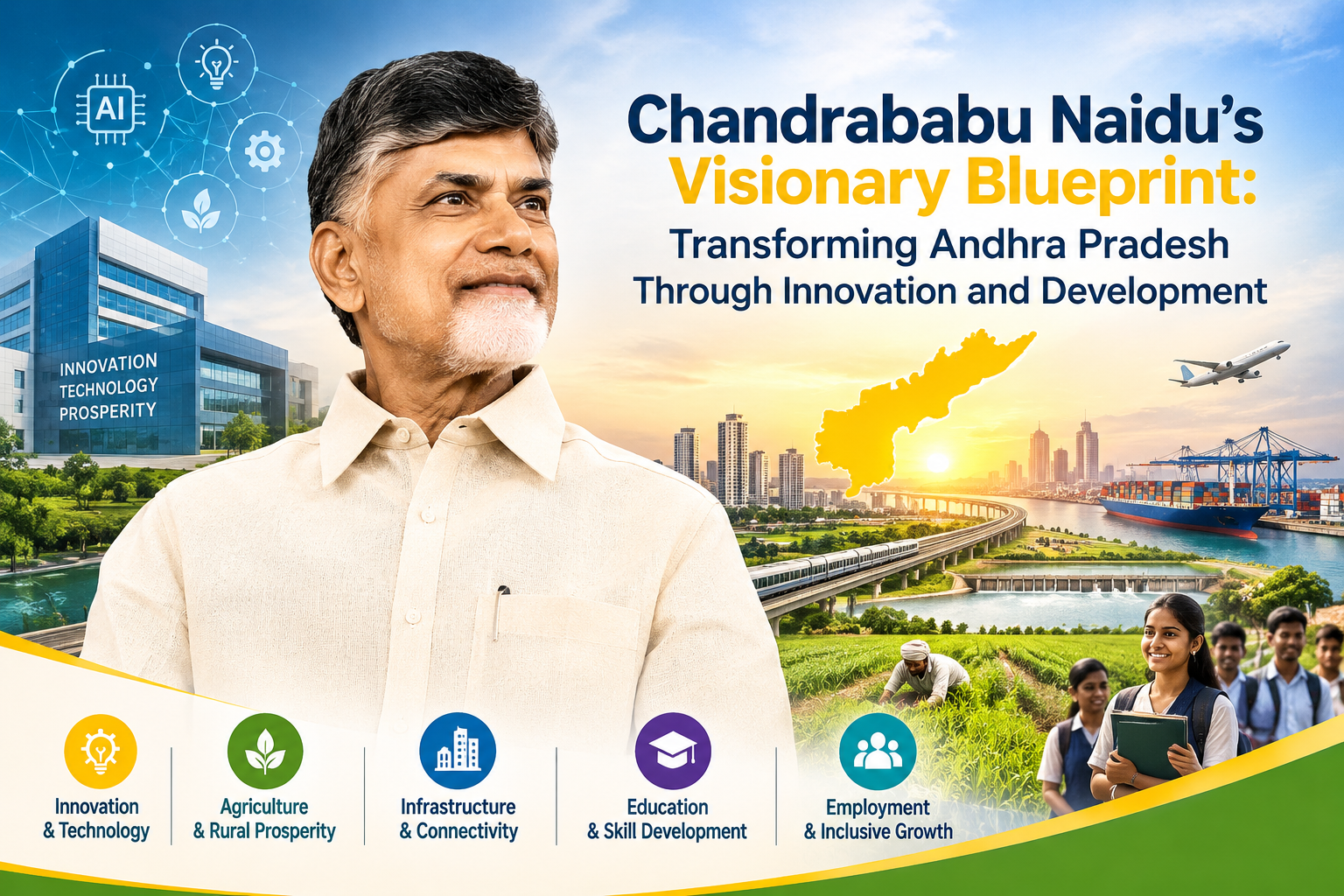
Chandrababu Naidu, a political stalwart and a visionary leader,
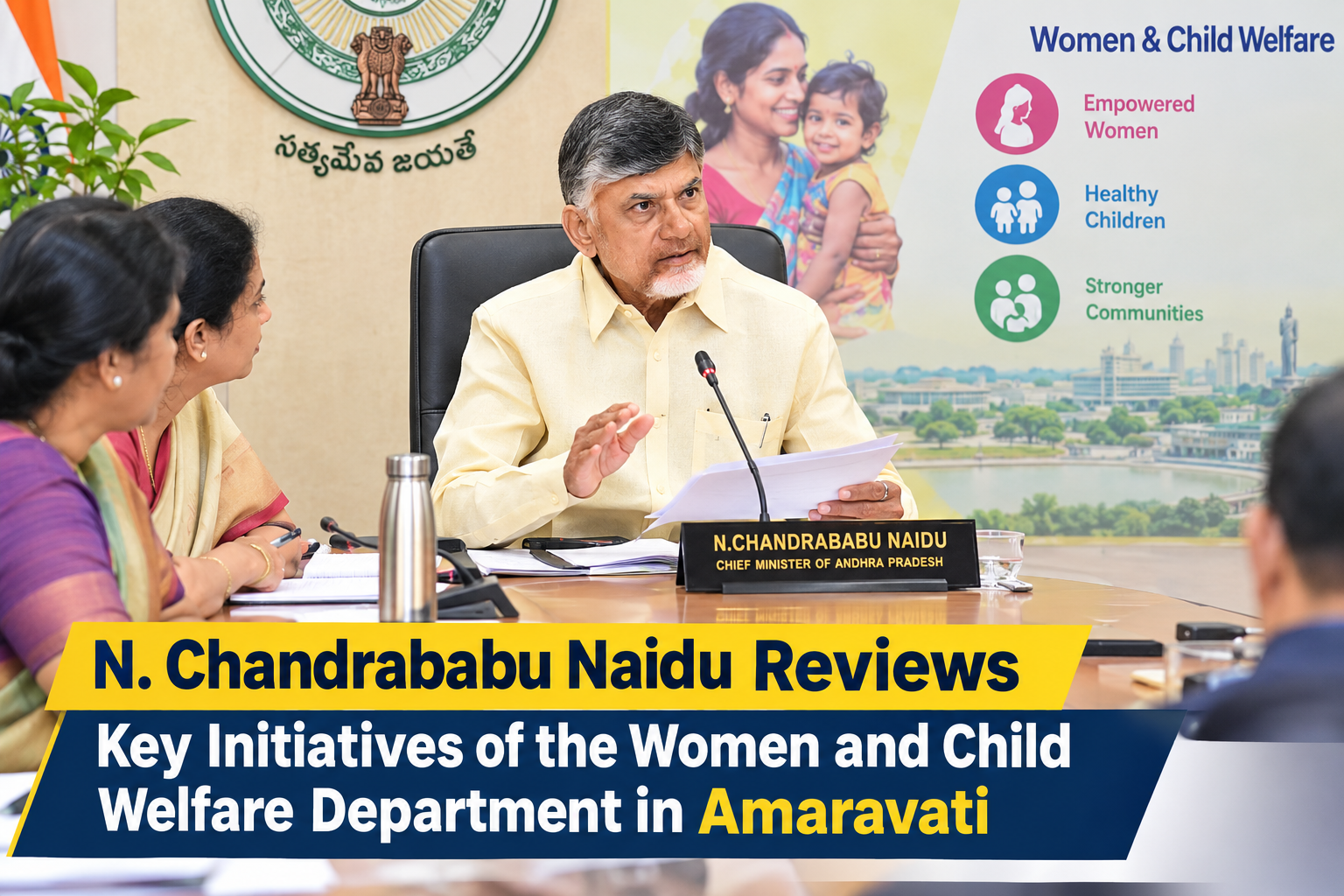
Amaravati, October 2024 – In a significant step towards